How to Invest on Revolut (2026)
Wondering how to invest your money directly inside Revolut? It's easier than you might think. This guide walks you through the entire process — from opening the Invest tab to placing your first stock or ETF order — all inside the Revolut app.
Whether you're a complete beginner or just new to Revolut's investing features, this step-by-step tutorial has you covered. You can get started with Revolut here.
1. What Is Revolut Investing?
Revolut is a digital banking app that has expanded well beyond basic payments. One of its most popular features is the built-in investing section, which lets you buy and sell stocks, ETFs, bonds, commodities, and more — all without leaving the app.
You don't need a separate brokerage account. Everything is managed from within Revolut, making it a convenient option for people who already use it for everyday banking.
2. Navigate to the Invest Tab in Revolut
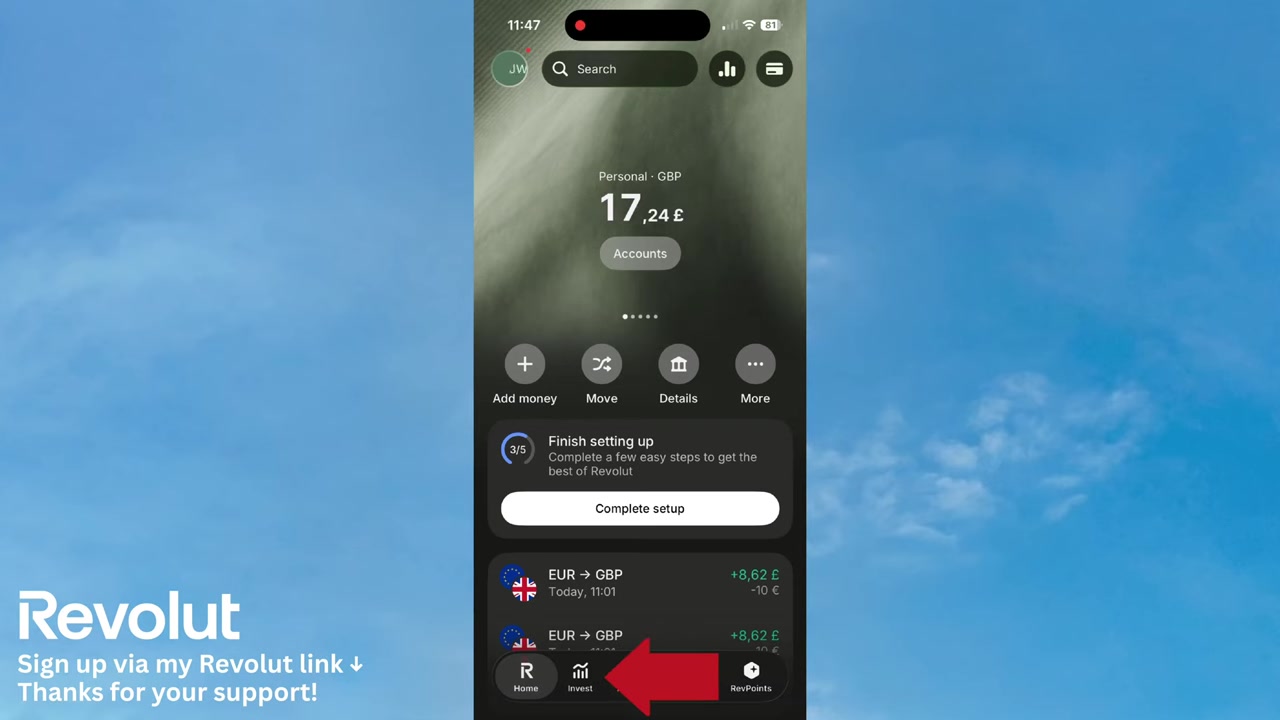
Open the Revolut app and tap on the Invest tab at the bottom of the screen. This brings you to the investing hub where you can browse available assets.
From here you'll see stocks, ETFs, and other investment options laid out clearly. Tap Start Investing to begin.
3. Complete the Onboarding Questions
Before you can place your first trade, Revolut will ask you a few short questions. These typically cover things like your employment status and investment experience.
This is a standard regulatory requirement. It only takes a minute to complete, and you only need to do it once.
4. Top Up Your Revolut Account Before Investing
If your Revolut balance is empty, you'll need to add funds first. You can top up from a linked euro account, dollar account, or any other supported currency.
Once you have a balance, you're ready to start trading. Make sure you only invest money you're comfortable putting at risk.
5. Search for Stocks or ETFs to Buy on Revolut
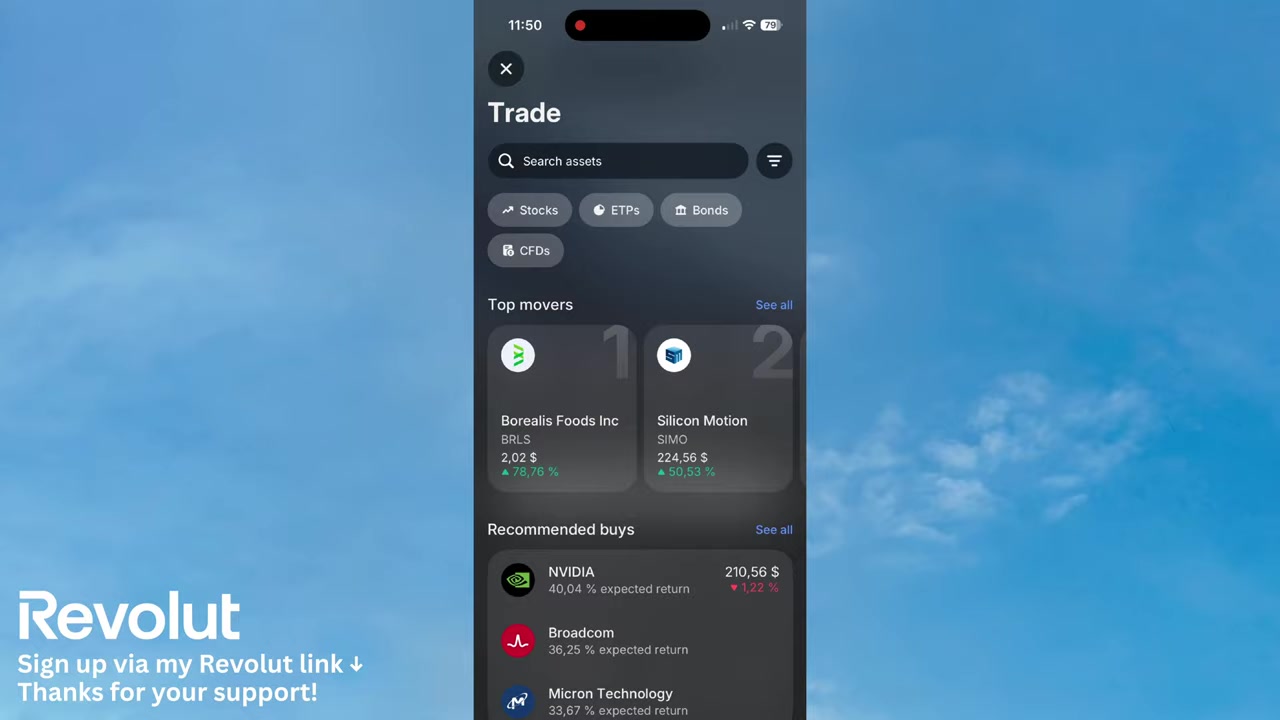
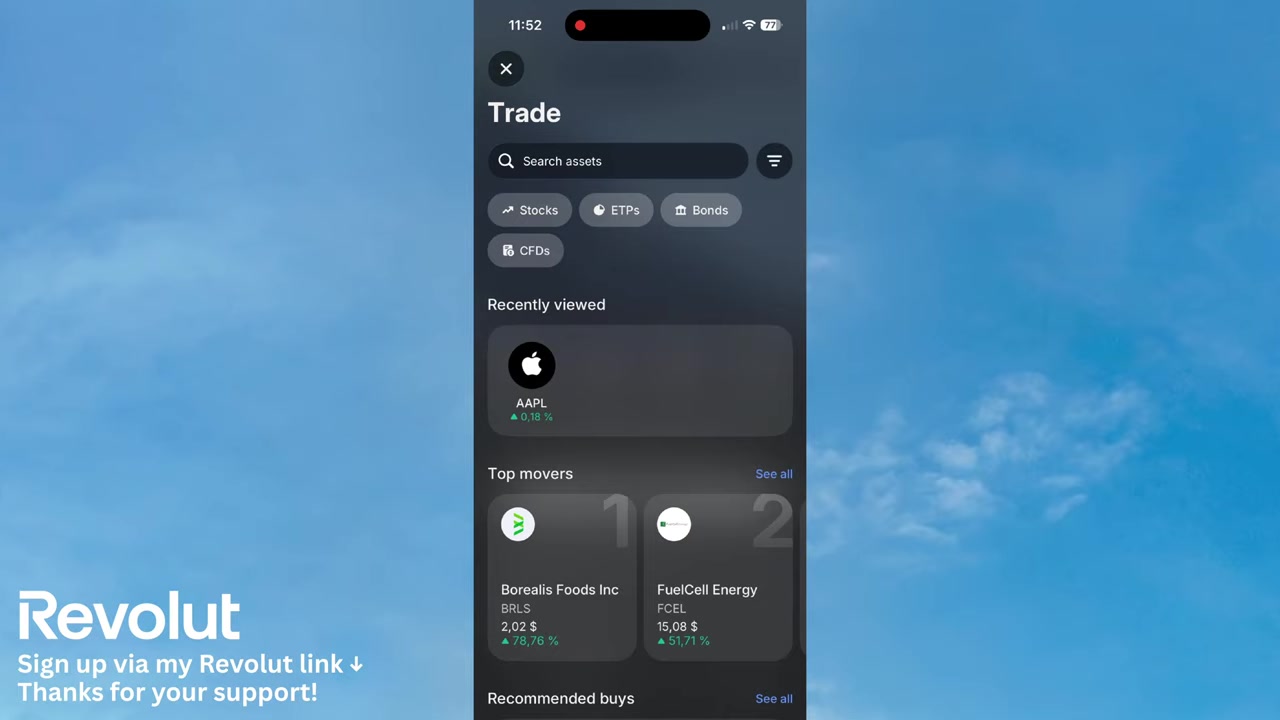
Tap Trade inside the Invest section. You can search for stocks, ETFs, bonds, and more using the search bar.
For example, type Apple to find the Apple stock. Tap the result to open the asset detail page.
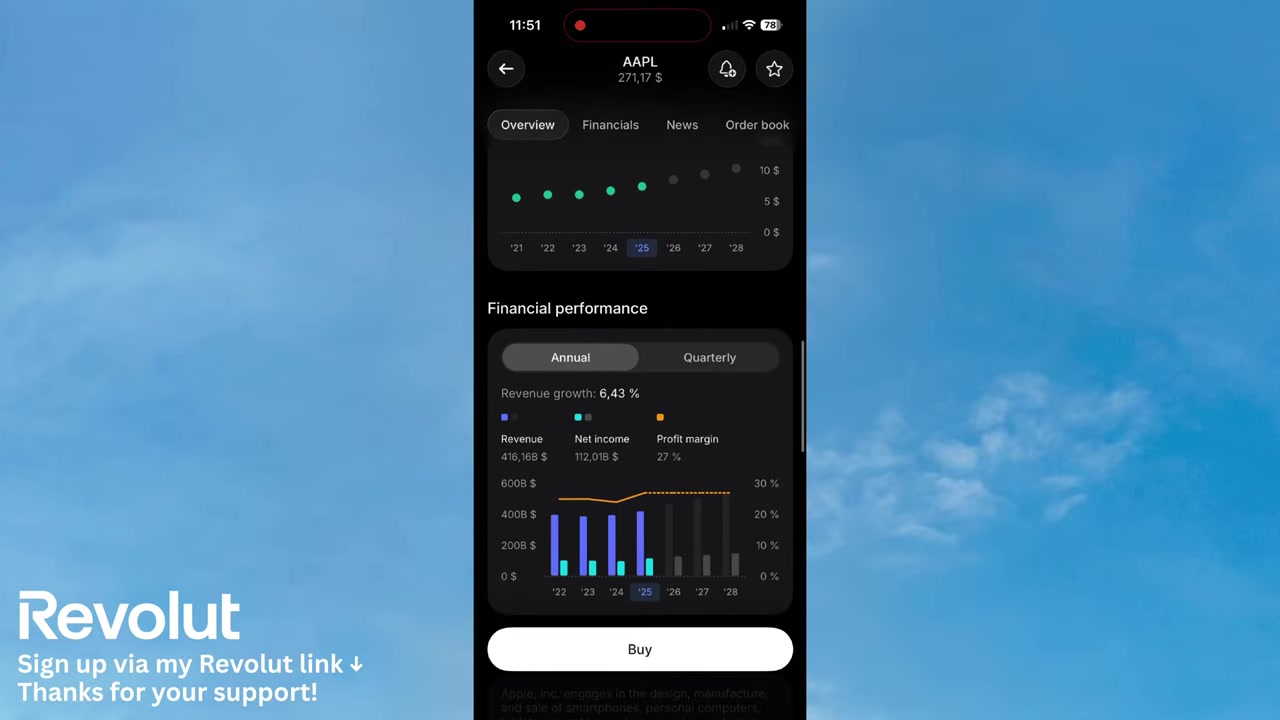
On the asset page, you can view the daily, weekly, and monthly price charts to see how the stock has been performing. Scroll down to find key stats like market cap, current price, upcoming events, and annual earnings per share.
6. Place Your First Investment Order
When you're ready to buy, tap the Buy button. Enter the amount you want to invest — for example, $20 — and tap Review.
On the confirmation screen, review your order details and tap Submit to complete the purchase. That's it — you now own shares.
7. What Can You Invest in on Revolut?
Revolut offers a surprisingly broad range of investment options:
- Stocks — individual company shares from global markets
- ETFs — diversified funds tracking indices or sectors
- Bonds — fixed-income securities
- CFDs — contracts for difference for more advanced traders
- Commodities — including gold, silver, and platinum
You can also browse assets by country, which is a handy way to discover stocks from specific markets. The most popular ETFs and bonds are highlighted so beginners can quickly find well-known options.
8. Revolut Investing Fees — What You Should Know
Revolut's fee structure for investing depends on your subscription plan. Free plan users get a limited number of commission-free trades per month, while paid plans (Plus, Premium, Metal) offer more free trades or unlimited commission-free trading.
Always check the current fee schedule inside the app before trading, as Revolut updates its pricing from time to time. Currency conversion fees may also apply if you're buying assets in a different currency than your account balance.
9. Is Revolut Good for Beginner Investors?
For beginners, Revolut's investing feature is one of the most accessible entry points into the market. The interface is clean, the onboarding is fast, and you can start with very small amounts.
However, it's worth keeping in mind that Revolut is primarily a banking app. Dedicated investment platforms may offer more advanced research tools, a wider asset selection, or lower fees for high-volume traders. For casual investors who want simplicity and convenience, Revolut is a solid choice.
If you run a business and want to invest through a business account, you can also sign up for Revolut for Business.
Frequently Asked Questions
How do I start investing on Revolut?
What assets can I buy on Revolut?
Can I invest small amounts on Revolut?
Does Revolut charge fees for investing?
Is my money safe when investing on Revolut?
Can I invest in ETFs on Revolut?
Do I need a separate brokerage account to invest through Revolut?
Can I invest in gold on Revolut?
10. Disclosure
Some links in this post are affiliate links. A commission may be earned if you sign up through these links — at no extra cost to you. All content is provided for informational purposes only. No guarantee of accuracy or results is given. This post does not constitute financial, legal, tax, or investment advice. Investing involves risk and your capital may be at risk. Always do your own research and consult a qualified professional if needed.
Related Articles
21 Jun 2026
How to Transfer Crypto to Wallet from Revolut (2026 New Tutorial)
Want to move your crypto out of Revolut and into your own wallet? It's simpler than you might think. In this tutorial, we'll walk you through exactly how to send cryptocurrencies from your Revolut acc...

22 Jun 2026
How To Send Money Internationally With Revolut In 2 Minutes!
Sending money abroad can feel complicated — but with Revolut, it takes just a couple of minutes. In this quick tutorial, you'll learn exactly how to make an international transfer with Revolut, step b...

28 Oct 2025
How to Create a TikTok Ads Account in 2026
Want to run ads on TikTok but not sure where to start? Setting up your TikTok Ads Manager account is easier than you think — and it only takes a few minutes. In this guide, I'll walk you through the e...